Understanding Waxing: Important Contraindications to Consider
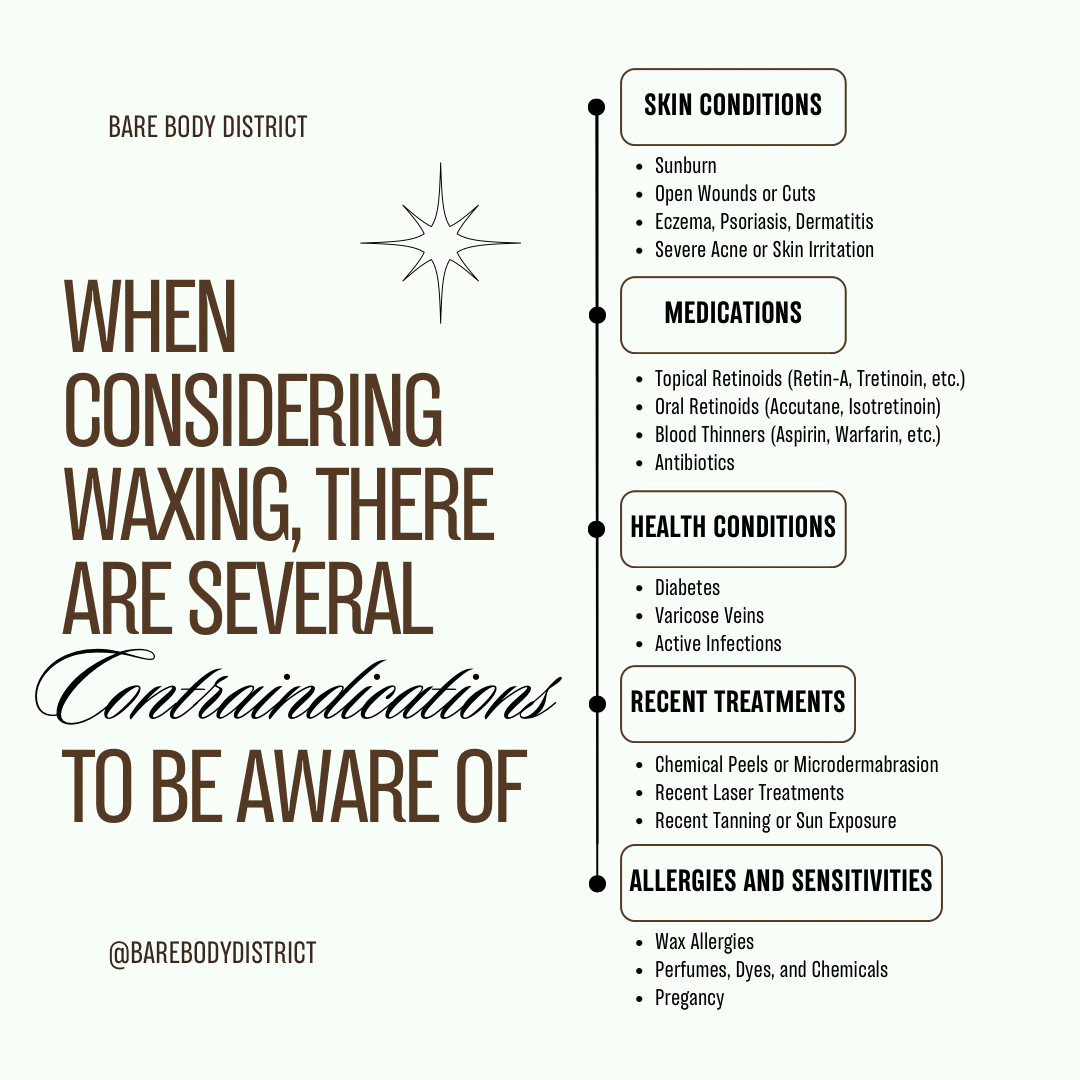
At Bare Body District, we’re dedicated to providing our clients with safe and effective waxing services. However, it’s essential to understand that waxing may not be suitable for everyone. Certain factors or conditions—known as contraindications—can make waxing unsafe or potentially harmful. In this blog post, we’ll explore common contraindications to help you make informed decisions about your waxing sessions.
What Are Contraindications?
Contraindications are conditions or factors that may pose risks when undergoing a particular treatment or procedure. In the context of waxing, being aware of these contraindications is crucial for ensuring your safety and comfort during the service. Before booking your appointment, consider whether any of the following conditions apply to you.
1. Skin Conditions
One of the most important considerations when waxing is the condition of your skin. Here are some common skin conditions that may affect your ability to wax safely:
Sunburn: Waxing on sunburned skin can lead to irritation and damage. The skin is already compromised, and pulling hair from this sensitive area can worsen the pain and prolong healing.
Open Wounds or Cuts: If you have any broken skin, such as cuts or abrasions, it’s best to avoid waxing. This can lead to infections or exacerbate existing injuries, complicating your skin’s recovery.
Eczema, Psoriasis, and Dermatitis: These skin conditions make your skin more sensitive. Waxing could trigger flare-ups or worsen symptoms, causing discomfort and potential complications.
Severe Acne or Skin Irritation: Areas with inflamed skin, particularly on the face or back, can be aggravated by waxing. It’s essential to allow such areas to heal before considering waxing.
2. Medications
Certain medications can affect your skin’s sensitivity and integrity, making waxing a risky endeavor:
Topical Retinoids (e.g., Retin-A, Tretinoin): These medications are known to thin the skin, increasing the risk of tearing or injury during waxing.
Oral Retinoids (e.g., Accutane, Isotretinoin): If you’ve taken these medications, it’s advisable to avoid waxing for at least six months after stopping. The skin remains fragile, and waxing could lead to severe irritation.
Blood Thinners (e.g., Aspirin, Warfarin): If you are on blood thinners, be aware that waxing may increase the risk of bruising or bleeding, leading to complications during and after the treatment.
Antibiotics: Some antibiotics can make your skin more sensitive, increasing the risk of irritation or adverse reactions from waxing.
3. Health Conditions
Certain health conditions may also impact your skin's ability to handle waxing:
Diabetes: Individuals with diabetes may experience slower healing times. Waxing can lead to increased risk of infection, so it’s essential to consider this factor carefully.
Varicose Veins: Waxing over varicose veins can cause irritation or injury to the area. If you have visible varicose veins, it’s best to discuss this with your esthetician before waxing.
Active Infections: If you have any bacterial, fungal, or viral infections in the area to be waxed (such as herpes or cold sores), it’s crucial to avoid waxing to prevent spreading or worsening the infection.
4. Recent Treatments
Your skin’s condition can be affected by recent cosmetic treatments. Here are some considerations:
Chemical Peels or Microdermabrasion: After undergoing these treatments, your skin may be more delicate. It’s advisable to wait at least 7-14 days before waxing to allow your skin to recover fully.
Recent Laser Treatments: Similar to chemical peels, laser treatments can increase skin sensitivity. It’s best to avoid waxing until your skin has had time to heal.
Recent Tanning or Sun Exposure: Freshly tanned skin is more sensitive and prone to damage. Avoid waxing until your skin has returned to its normal state.
5. Allergies and Sensitivities
Some individuals may have allergies or sensitivities that can complicate waxing:
Wax Allergies: If you’ve experienced allergic reactions to waxing in the past, it’s crucial to inform your esthetician. Individuals with sensitive skin may react adversely to certain wax ingredients.
Perfumes, Dyes, and Chemicals: If you have sensitivities to specific chemicals, avoid waxes that contain these ingredients. Always check with your esthetician about the products used during your session.
6. Pregnancy
Pregnancy can significantly affect your skin's sensitivity. Many pregnant individuals experience heightened skin sensitivity, especially in the later stages. This can make waxing more painful and prone to irritation. If you are pregnant, be sure to discuss your options with your esthetician to determine the safest approach for you.
At Bare Body District, we prioritize your safety and comfort. Understanding the contraindications associated with waxing can help you make informed choices and ensure a positive experience. Before booking your appointment, be sure to communicate any health conditions, medications, or concerns you may have. Our trained estheticians are here to guide you and recommend the best options for your unique situation. Your well-being is our top priority, and we look forward to helping you achieve smooth, beautiful skin!
Related: Unlocking Radiance: The Timeless Beauty Ritual of Jade Rolling